The Complete Guide to AI-Powered Patient Booking for US Dermatology Clinics
The Complete Guide to AI-Powered Patient Booking for US Dermatology Clinics
The Paradigm Shift in Dermatology Patient Access
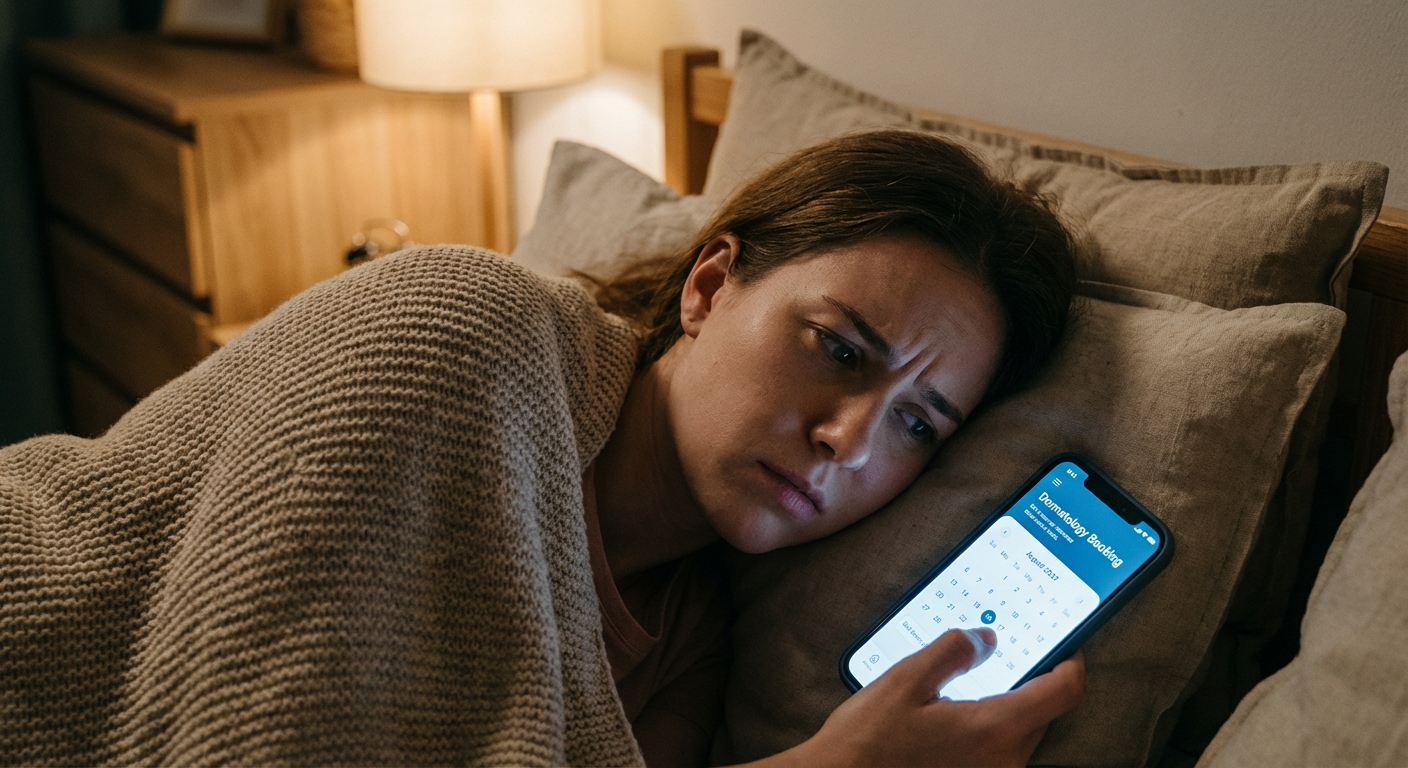
Evolving Patient Expectations in Modern Healthcare
Your patients don’t think about scheduling a dermatology appointment the way they did even five years ago. They’ve been booking Ubers, ordering groceries at 11 PM, and reserving restaurant tables through an app for years now. The expectation has fundamentally shifted: they want instant access, they want it on their terms, and they really don’t want to be put on hold.
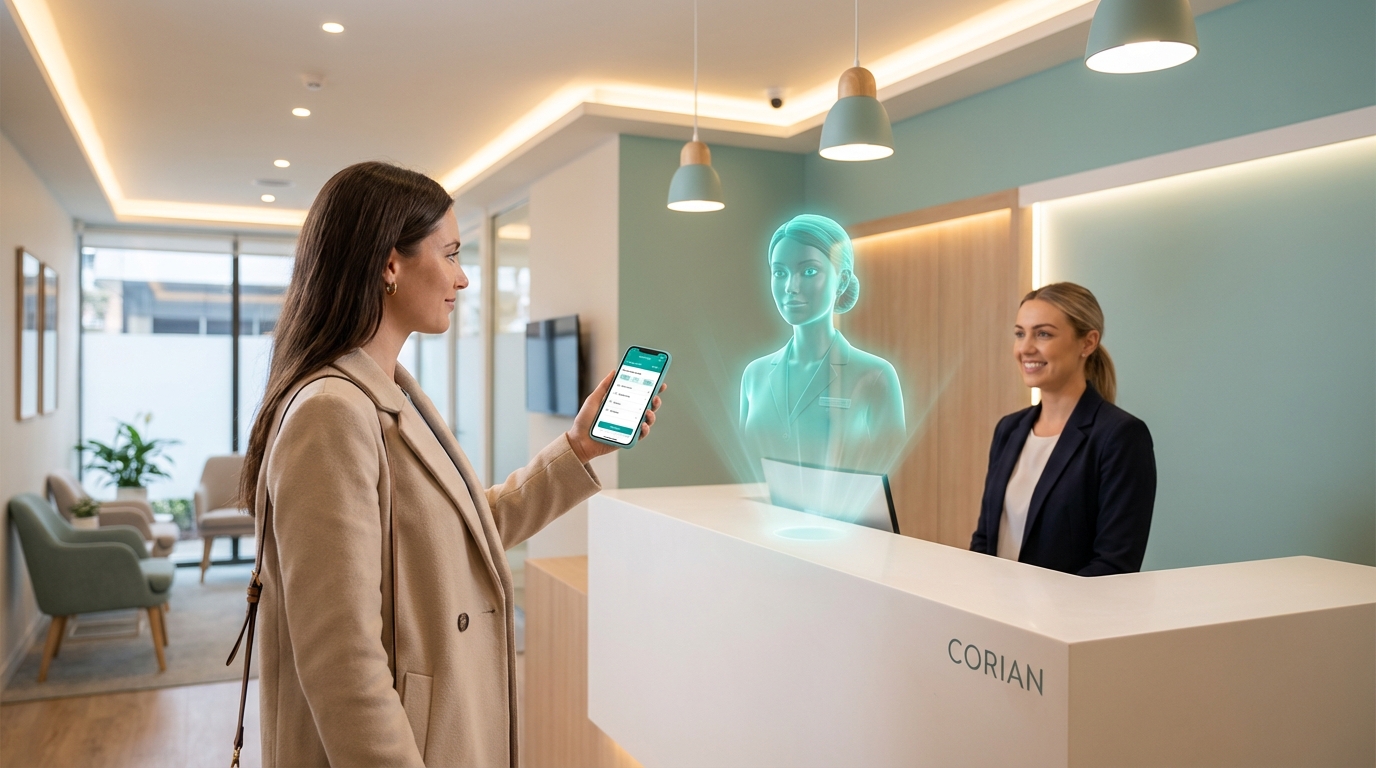
I’ve watched dermatology practices struggle with this disconnect. A patient notices a concerning mole at 8 PM while scrolling Instagram. Their immediate instinct isn’t to call during business hours tomorrow—it’s to grab their phone and try to book an appointment right now. When they hit a voicemail message telling them to call back between 9 and 5, you’ve already lost momentum. Maybe they’ll remember to call tomorrow. Probably they won’t.
Consumer technology has trained us to expect everything to happen immediately. Amazon delivers in a day. Netflix streams instantly. Even my local pizza place has real-time order tracking. Healthcare has been the holdout, and patients are increasingly unwilling to tolerate it.
The Impact of Digital Transformation on Specialty Clinics
Here’s what’s changed: the front door to your practice isn’t your physical entrance anymore. It’s wherever your patient happens to be looking at their phone. That’s a weird shift when you think about it—the primary access point to medical care is now a digital touchpoint.
Traditional phone routing systems were built for a different era. You had receptionists who answered calls during business hours, maybe a service that took messages after hours. That model assumed patients would adapt to your availability. They won’t anymore. Clinics seeing the most growth are the ones that flipped this assumption—they’re adapting to patient availability instead.
The specialty clinic world is splitting into two camps. You’ve got practices that are digitizing their patient experience end-to-end, and you’ve got practices that are watching their patient acquisition costs climb while wondering why younger demographics aren’t calling. The gap between these two groups is widening fast.
Defining AI-powered patient booking for US dermatology clinics
Core Concepts of Artificial Intelligence in Scheduling
Let me be clear about what we’re talking about here because “AI-powered booking” gets thrown around pretty loosely. A basic online calendar where patients click available slots isn’t AI—that’s just a digital appointment book. Actual AI-powered patient booking for US dermatology clinics involves systems that can understand natural language, make contextual decisions, and adapt to complex scheduling scenarios without human intervention.
The distinction matters. An intelligent booking engine uses machine learning algorithms to match appointments based on multiple variables simultaneously: the patient’s described concern, provider expertise, appointment duration requirements, insurance network participation, and even historical no-show patterns. It’s processing information the way a really experienced front desk coordinator would, just instantly and at scale.
Think of it this way: when a patient says “I need to see someone about this rash on my hands, it’s been there for three weeks and it’s getting worse,” the AI is parsing symptom severity, body location, duration, and urgency all at once. Then it’s matching that to the right provider type and suggesting appropriate appointment lengths. A basic calendar can’t do any of that.
Application Specific to Skin Care Practices
Dermatology adds layers of complexity that make intelligent scheduling particularly valuable. You’re not booking generic “doctor visits”—you’re categorizing between medical concerns that need board-certified dermatologists, cosmetic procedures that certain providers specialize in, surgical cases that require specific equipment, and screening appointments with their own protocols.
The AI has to understand dermatological taxonomy in a way that mirrors how your practice actually operates. When someone mentions “Botox consultation,” the system needs to know that’s cosmetic, route it to providers who offer aesthetic services, block appropriate time (shorter than a medical visit), and potentially flag it for different billing processes. When another patient describes symptoms that sound like melanoma, the system needs to prioritize urgency and route to a provider qualified to perform biopsies.
I’ve seen systems that try to shoehorn dermatology into generic medical scheduling templates. They fail pretty spectacularly because they don’t account for the massive variation in visit types. A full-body skin check, a wart removal, an acne follow-up, and a cosmetic laser consultation all require completely different handling.
The Current Scheduling Crisis in US Dermatology Practices

Staffing Shortages and Administrative Burnout
The medical receptionist shortage isn’t some abstract staffing challenge—it’s actively breaking dermatology practices right now. Try to hire a qualified front desk coordinator in any mid-sized US city. You’re competing with dozens of other practices, offering salaries that have jumped 30-40% in three years, and even then, you’re getting applicants with minimal experience.
People you do hire are walking into a meat grinder. Peak call volume at a busy dermatology practice can hit 200+ calls per day, and that’s before you count patient check-ins, insurance verifications, and the endless stream of pharmacies calling about prior authorizations. I watched a receptionist at a Tampa practice field 47 calls before lunch last Tuesday. Forty-seven. She looked absolutely exhausted, and this was supposedly a “normal” day.
Burnout isn’t just about volume—it’s about the nature of the work. Answering the same questions repeatedly, dealing with frustrated patients who’ve been on hold, managing the stress of knowing that each unanswered call might be urgent. Staff turnover at the front desk is running about 40% annually in dermatology practices I’ve consulted with. That’s not sustainable, and it’s not because people are lazy or uncommitted.
The Bottleneck in Patient Acquisition
Here’s a statistic that should get your attention: the average dermatology practice misses about 23% of incoming calls during business hours. After hours, that number is obviously 100%. Each missed call represents a patient who wanted to give you their business and couldn’t. (Though honestly, I’d want to know how that 23% figure was measured—call center data? Practice surveys? The methodology matters here.)
Let’s do some quick math. If your practice gets 150 calls per week and misses 23%, that’s about 35 missed calls. If your conversion rate on answered calls is around 70%, you’re losing roughly 24 new patient appointments per week. For a dermatology practice where the average new patient generates $850 in first-year revenue (between the initial visit and likely follow-ups), you’re leaving $20,400 on the table weekly. That’s over a million dollars annually.
Friction points stack up. Patient calls during lunch when staff is unavailable. Gets voicemail. Leaves message. Staff calls back three hours later. Patient’s in a meeting. Phone tag continues. Maybe an appointment gets scheduled eventually, maybe the patient goes to your competitor who answered on the first ring, or maybe they just give up entirely because booking a dermatology appointment shouldn’t require this much effort.
Transitioning to a Healthcare AI Call Center Model

Limitations of Traditional Phone Trees and Answering Services
You know those phone tree systems that start with “Press 1 for appointments, Press 2 for billing…” and then proceed to offer eight more options? Patients hate them with a surprising intensity. Static IVR (Interactive Voice Response) systems were invented in the 1970s, and the basic user experience hasn’t improved much since then.
The fundamental problem is rigidity. These systems only work if the patient’s need perfectly matches one of your pre-programmed options. If someone’s calling about a rash but also needs to verify their insurance and wants to know if they should stop using a medication before their appointment, the phone tree completely falls apart. They’re forced to navigate multiple menu levels, usually ending up transferred to a human anyway—after five minutes of frustration.
Third-party answering services solve one problem (someone answers the phone) but create others. Response time is delayed—they take messages and forward them to your staff, who then have to call patients back. Service representatives don’t know your practice protocols, can’t access your schedule in real-time, and definitely can’t make nuanced decisions about appointment types or urgency. You’re essentially paying for a more expensive, slightly more responsive voicemail system.
The Modern Automation Approach
The healthcare AI call center model is fundamentally different. It’s not about routing calls through menus or taking messages—it’s about creating a centralized intelligence layer that can actually handle the full interaction. Patient calls in, the AI answers in seconds, understands the request through natural conversation, checks real-time availability in your EHR, books the appropriate appointment type, and confirms everything with the patient before hanging up. The entire interaction takes three minutes, and it happens whether your human staff is available or not.
What makes this work is the omnichannel aspect. The same AI that handles voice calls is also managing text messages, web chat, and even patient portal communications. A patient can start a conversation via SMS at 10 PM, get halfway through scheduling, abandon it, and then call the next morning—the system remembers the context and picks up where they left off.
Data flows continuously in both directions. When your front desk staff manually blocks out time for a provider meeting, the AI sees it instantly and stops offering those slots. When a patient cancels through the AI system, your human team sees it in the practice management software immediately. There’s no data lag, no duplicate entry, no reconciliation process at the end of the day.
How conversational AI for dermatology actually works
The Underlying Technology Stack
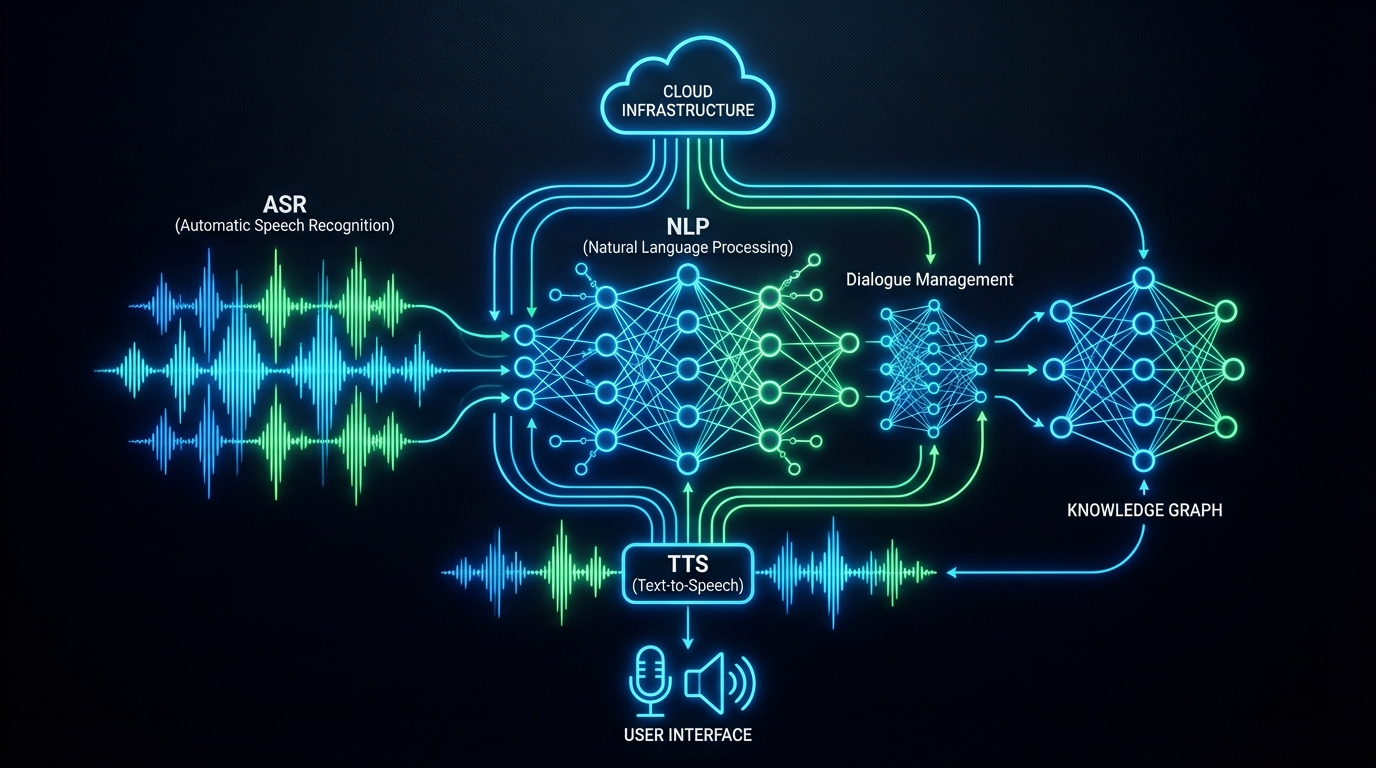
Conversational AI for dermatology sits on top of several interconnected technologies, and honestly, understanding the basics helps you evaluate vendors more effectively. The voice recognition component (usually called Automatic Speech Recognition or ASR) converts spoken words into text that the system can process. Modern ASR has gotten scary good—it handles accents, background noise, even people talking with food in their mouth (which happens more than you’d think on patient calls).
Synthesis works in reverse—it takes the AI’s text response and converts it to natural-sounding speech. This is where a lot of systems still feel robotic if the vendor cheaped out on the technology. Good voice synthesis includes proper intonation, natural pausing, and even subtle emotional coloring. When the AI says “I’m so sorry you’re dealing with that rash, let’s get you scheduled quickly,” it should actually sound sympathetic rather than creepy.
Intent classification is the brain of the operation. The AI takes what the patient said, figures out what they’re actually trying to accomplish (book an appointment, ask about costs, check on test results), and then determines how to respond. This involves machine learning models trained on thousands of previous medical scheduling conversations. Dialogue management keeps track of where you are in the conversation, what information has been collected, and what still needs to be gathered.
Machine Learning in Daily Practice
Here’s what’s kind of fascinating: these systems get smarter the more they’re used. Every conversation feeds back into the machine learning models (in a privacy-compliant way—more on that later). If 40 patients in a row describe a “spot that’s changed color,” and the AI successfully routes them to medical dermatology appointments that turn out to be appropriate, the system reinforces that pattern.
Continuous improvement means the AI adapts to your specific practice’s patterns and terminology. Maybe your clinic uses particular shorthand for certain procedures, or your patient population tends to describe symptoms in regional dialect. The system picks up on these patterns over time. I’ve seen implementations where the AI learned that when local patients said “my skin’s acting up again,” they specifically meant eczema flares, not acne—because that’s how that particular patient population had been speaking in that geographic area.
You don’t need to actively manage this day-to-day. Learning happens in the background. But it does mean that system performance typically improves noticeably in the first 3-6 months of deployment as it accumulates interaction data specific to your practice.
Natural Language Processing in Dermatological Contexts
Understanding Clinical Terminology
Parsing Complex Skin Conditions
Natural Language Processing (NLP) in dermatology has to handle a pretty wild spectrum of terminology. On one end, you’ve got patients using clinical terms they Googled: “I think I have seborrheic dermatitis.” On the other end, you’ve got “my face is doing that flaky red thing again.” The AI needs to understand both, and more importantly, it needs to recognize when patients are using clinical terminology incorrectly.
Training NLP models for dermatological contexts means feeding them thousands of examples of how real patients describe skin conditions. Psoriasis might be described as “scaly patches,” “thick red spots with white stuff,” or “that thing I have on my elbows that won’t go away.” The AI learns to map these varied descriptions to the appropriate clinical category—not for diagnosis (it can’t and shouldn’t diagnose), but for routing to the right provider and appointment type.
Differentiating between layman descriptions that are fine versus ones that signal the patient needs triage is tricky. When someone says “I have a mole that’s gotten bigger and darker,” that’s a description that should trigger urgency flags and potentially route to immediate screening availability. When someone says “I want to talk about removing a mole because I don’t like how it looks,” that’s cosmetic and less urgent. Same word (mole), completely different handling required.
Contextual Intent Recognition
Real conversations don’t happen in neat, single-purpose statements. A patient might say something like “I need an appointment for this rash, but also I think I’m due for my annual skin check, and do you guys take Aetna now because I switched insurance?” That’s three separate intents in one breath, and the AI needs to untangle them.
Maintaining conversational context over multiple turns is where cheaper systems fall apart. Imagine this exchange: “I need to see Dr. Martinez.” “Dr. Martinez is available on Thursday at 2 PM.” “Actually, do you have anything earlier in the week?” The AI needs to remember we’re still talking about Dr. Martinez, still looking at the same appointment type, just adjusting the time constraint. That sounds simple, but it requires the system to hold multiple pieces of contextual information active throughout the dialogue.
I’ve tested systems that lose context after about three conversation turns. Patients end up having to re-state their entire request because the AI forgot what they were originally asking for. It’s infuriating, and patients abandon those interactions quickly. Good conversational AI maintains a memory of the entire exchange and references back to earlier statements when needed.
Agentic AI versus Traditional Rule Based Chatbots

Dynamic Problem Solving in Appointment Routing
Traditional rule-based chatbots follow decision trees: if patient says X, then do Y. They’re predictable, consistent, and completely unable to handle anything outside their programmed scenarios. A large specialty practice uses agentic AI to strengthen patient engagement specifically because it moves beyond these rigid paths.
Agentic AI has goals rather than scripts. The goal is “successfully schedule an appropriate appointment for this patient,” but the path to get there is dynamic. If the patient’s preferred time isn’t available, the AI can negotiate alternatives, check if there’s flexibility on provider selection, or even explore whether an earlier consultation via telehealth would work. It’s problem-solving in real-time rather than following a flowchart.
So why does this matter for dermatology specifically? You’re balancing provider specialization, appointment type requirements, urgency levels, patient preferences, and availability constraints simultaneously. Rule-based systems crack under this complexity—there are too many possible scenarios to pre-program. Agentic AI treats each conversation as a unique problem to solve within the constraints you’ve set.
Real World Application in Specialty Practices
Here’s a practical example I saw recently at a 6-provider practice in Phoenix. A patient called wanting a cosmetic consultation for acne scarring treatment. The AI engaged in conversation and learned the patient had active acne, not just scarring. A rule-based system would have just booked the cosmetic consultation. But the agentic AI recognized that treating active acne first is standard protocol, suggested booking a medical dermatology appointment to address the active condition, and offered to add the patient to a waitlist for cosmetic consultation later. That’s contextual reasoning—understanding the goals and optimizing the path to get there.
Systems can make autonomous decisions within parameters you define. You might tell the AI: “If someone needs an urgent screening and we’re fully booked, you’re authorized to extend clinic hours by offering the last appointment slot at 5:30 PM, but don’t offer this more than twice per week.” The AI then makes that judgment call situation by situation, tracking the weekly count and optimizing access without requiring human oversight for each decision.
What this looks like in practice is fewer escalations to human staff and higher successful booking rates. The AI negotiates appointment times, offers alternatives, and finds solutions without needing to transfer the patient to a person. As dermatology clinics use AI while staying HIPAA compliant, this autonomous problem-solving capability dramatically improves both patient experience and scheduling efficiency.
Voice Systems versus Text Based automated patient scheduling software

Voice Assistant Capabilities and Nuances
Voice is harder than text. Way harder. When someone’s talking to an AI over the phone, the system has to process speech in real-time while managing conversational pacing, handling interruptions (patients talk over the AI constantly), and dealing with background noise. I’ve heard calls where the patient is scheduling an appointment while driving, with kids screaming in the back seat and GPS directions announcing turns. The AI has to filter signal from chaos.
Empathy matters more in voice than text too. When a patient describes a painful condition, the voice system’s response needs appropriate emotional coloring. A flat, robotic “I understand” sounds dismissive and weird. Synthesis needs to convey warmth and concern naturally. This is one area where technology has improved dramatically in the past two years—modern voice AI can sound genuinely empathetic rather than uncanny valley creepy.
Conversational repair is another voice-specific challenge. When the AI misunderstands something (and it will occasionally), it needs to recover gracefully. Recognizing confusion, asking for clarification naturally, and maintaining patient trust through the error. Text systems can get away with “I didn’t understand that, please rephrase,” but voice requires more sophisticated recovery: “I want to make sure I get this right—when you say ‘spots,’ do you mean small dots, or larger areas of discoloration?”
SMS and Web Chat Integration
Text-based channels are huge for patient convenience, especially for younger demographics who genuinely prefer texting to talking on the phone. SMS scheduling lets patients engage during moments when voice calls aren’t practical—during work meetings, in loud environments, or at 2:17 AM when they’re awake worrying about a skin concern but don’t want to actually call anyone.
Good automated patient scheduling software maintains a unified patient profile across all channels. Whether someone calls, texts, or uses web chat, the AI maintains a single conversation history and data record. A patient can start scheduling via SMS, get interrupted, and then finish through a web chat portal on their laptop later—the context is preserved seamlessly.
Text channels also allow for asynchronous communication, which changes the dynamic. Patients don’t need to complete the entire interaction in one session. The AI can send an appointment reminder via SMS, the patient can request a reschedule in response, and the AI handles it—all without anyone being simultaneously engaged in real-time conversation. This flexibility drives significantly higher patient engagement rates than voice-only systems.
The Anatomy of a HIPAA-compliant AI receptionist
Essential System Architecture
HIPAA compliance isn’t a feature you bolt on—it’s fundamental to how the entire system is architected. A HIPAA-compliant AI receptionist needs secure perimeters around every point where patient data enters, processes, or stores. Encrypted data transmission from the moment a patient starts speaking, isolated processing environments that are completely separated from public internet traffic, and strict access controls on who (human or system) can touch that data.
Architecture typically involves multiple layers of security. Patient interactions happen through encrypted channels (TLS 1.3 for web traffic, SRTP for voice calls). Data then moves into a processing layer that’s firewalled off and monitored for intrusion attempts. Storage happens in encrypted databases with role-based access control—meaning the AI system itself only has permission to access exactly what it needs for scheduling, not your entire patient database.
What makes this complex is that the system needs to integrate with your existing EHR and practice management software while maintaining these security boundaries. You can’t just give an AI vendor open access to your entire EHR database. Integration needs to be carefully scoped: the AI can query appointment availability and book appointments, but it can’t browse patient histories or access financial records unless specifically needed for the interaction.
Protecting Protected Health Information
Here’s where it gets technical, but bear with me—this stuff matters. During the machine learning training phase, patient data needs to be anonymized or de-identified. The AI is learning patterns from thousands of conversations, but those training datasets can’t contain actual patient names, dates of birth, or specific medical details that would violate HIPAA. This usually means scrubbing all personally identifiable information (PII) and protected health information (PHI) before conversations are used to improve the models.
In production use, the AI processes PHI in real-time because that’s necessary for scheduling—it needs to know who the patient is, access their appointment history, update their record. But this processing happens in a secure environment with full audit logging. Every access is tracked: which patient record, what information was viewed, when it happened, and what action was taken.
Clinic administrators need granular access controls. Not everyone on your staff should be able to review all AI conversation transcripts. You might give your office manager access to review scheduling conversations for quality assurance, but restrict access to conversations containing sensitive medical details to your compliance officer only. The system needs these configurable permission levels built in.
Implementing 24/7 Appointment Booking Architectures
After Hours Capture Mechanisms
After-hours booking capability is honestly one of the highest ROI features of AI scheduling. About 40% of patients prefer to handle administrative tasks like booking appointments outside of standard business hours. (Okay, you probably knew that already.) These are people finishing work, winding down for the evening, and suddenly remembering they need to schedule that skin check.
Turning after-hours calls and texts into confirmed appointments requires the system to have complete access to your real-time calendar and the intelligence to book appropriately without supervision. The AI needs to understand your booking rules: which providers accept new patients, what appointment types can be self-scheduled versus which need staff review, whether certain cosmetic procedures require consultation before booking treatment.
I’ve seen practices capture an additional 30-40 appointments per month purely from after-hours availability. These aren’t hypothetical leads—they’re confirmed, scheduled appointments that wouldn’t exist otherwise. Patient wanted to book at 9 PM on a Wednesday, and your AI-powered system said “yes, I can help you right now,” while your competitors sent them to voicemail.
Real Time Calendar Sync Mechanisms
Technical challenge here is preventing double-booking when multiple systems and people are accessing the same calendar simultaneously. If your front desk staff is booking an appointment at 10:15 AM for the 2 PM slot, and simultaneously a patient is booking through the AI for that same slot, you need conflict resolution that happens in milliseconds.
This requires concurrent availability checking—the AI doesn’t just load appointment data once at the start of a conversation, it’s querying real-time availability at the moment of booking and using database locking mechanisms to reserve the slot temporarily during the transaction. Same technology that prevents you from buying the last airline seat that someone else is also trying to purchase at the exact same moment.
Managing complex provider schedules adds another layer. Your providers have vacations, conferences, blocked administrative time, and unpredictable schedule changes. The AI needs to respect all of these constraints dynamically. When a provider calls in sick and you block their entire day, the AI should stop offering their appointments instantly, not two hours later after manual synchronization.
Triage Capabilities for Urgent Dermatological Concerns

Identifying Red Flag Symptoms
Automated Symptom Checking Protocols
This is delicate territory because you’re not building a diagnostic tool (that would require FDA approval and a completely different regulatory approach). You’re building a triage and prioritization system that recognizes when a patient’s description warrants urgent attention versus routine scheduling.
AI is trained on red flag terminology for dermatology: rapidly changing moles, bleeding lesions that won’t heal, severe widespread rashes with systemic symptoms, signs of infection like fever combined with skin inflammation. When the system detects these patterns in patient descriptions, it shifts from standard scheduling into urgent triage mode.
What this looks like practically: A patient calls saying “I have this mole on my back that my wife says has gotten a lot bigger in the past two months and it’s kind of an irregular shape.” The AI recognizes multiple melanoma warning signs (changing size, irregular shape, patient concern level). Instead of offering an appointment three weeks out, it flags this for same-week screening or potentially same-day evaluation depending on your protocols.
Systems categorize inquiries into tiers—routine, urgent, and emergency. Emergency tier (severe allergic reactions, signs of serious infection, suspected MRSA) might trigger immediate transfer to medical staff or direction to emergency care. Urgent tier gets prioritized scheduling, often with notification to your clinical team. Routine follows standard booking flow.
Escalation Protocols to Human Staff
No matter how sophisticated the AI, some situations require immediate human judgment. Escalation protocols need to be seamless—the patient shouldn’t feel like they’re being bounced around. When the AI determines that a concern needs clinical evaluation before booking, it should say something like “Based on what you’re describing, I want to connect you with our medical team directly so they can help determine the best timing for your visit.”
Handoff needs to include context. When the call transfers to your nurse or medical assistant, they should see a summary of what the patient already explained to the AI. Nothing’s more frustrating for a patient than describing their symptoms in detail to an AI, getting transferred, and then having to explain everything again from scratch to a human.
Within your practice management dashboard, urgent cases flagged by the AI should generate priority alerts. Maybe it’s a specific notification sound, a red-flagged item at the top of the queue, or an automatic text to the clinical manager. The system needs to guarantee these don’t get buried in the regular workflow.
Automated Waitlist Management and Cancellation Filling
Protecting Practice Revenue
Empty appointment slots are direct revenue loss. The average dermatology practice runs about a 12-15% cancellation and no-show rate, which means you’re losing roughly one out of every eight appointment slots. For a practice with four providers seeing 120 patients per day, that’s about 15 lost appointments daily. At an average reimbursement of $200 per visit, you’re hemorrhaging $3,000 per day—$750,000 annually.
AI-powered waitlist management turns this problem into an opportunity. The system monitors your schedule constantly for gaps—last-minute cancellations, no-shows, or schedule changes that free up slots. The moment a gap appears, the AI automatically identifies patients on the waitlist who match that appointment type and availability, and reaches out to offer the slot.
Financial impact is significant. Clinics implementing automated waitlist management typically recover 60-70% of last-minute cancellations by filling them with waitlisted patients. That’s roughly $450,000 in recovered revenue for our hypothetical four-provider practice. Honestly, this feature alone can justify the entire cost of the AI system.
Dynamic Rescheduling Features
Here’s how it works in practice: A patient cancels their 2 PM appointment at 10 AM on the same day. Within minutes, the AI identifies three patients on the waitlist who requested similar appointments and had indicated some flexibility for same-day availability. The system sends automated SMS offers: “An appointment slot just opened up today at 2 PM with Dr. Chen. Reply YES to claim it or NO to stay on the waitlist.”
First patient to respond affirmatively gets the slot, and the system immediately updates the central calendar, sends confirmation details to the patient, and removes them from the waitlist. The entire process takes maybe five minutes and requires zero staff involvement. Your front desk team simply sees the 2 PM slot change from canceled to filled.
Matching sophistication matters here. The AI isn’t just looking at appointment timing—it’s matching appointment type (medical versus cosmetic), provider specialization, patient preferences (maybe they specifically requested a provider who speaks Spanish), and practical logistics like whether the patient indicated they need afternoon appointments due to work schedules.
Multi Lingual Support for Diverse US Patient Populations

Breaking Language Barriers in Care Access
US dermatology patient population is incredibly linguistically diverse, but most practices operate primarily in English with ad hoc interpretation when needed. This creates massive access barriers. A Spanish-speaking patient who’s uncomfortable scheduling in English might avoid calling altogether, or they might struggle through a frustrating conversation that results in miscommunication about appointment details.
AI-powered multilingual support deploys native-speaking models for major languages. A patient calls and says “Hola, necesito hacer una cita,” and the AI immediately switches to Spanish for the entire conversation. This isn’t translation in the clunky sense—it’s actual natural language processing trained specifically in Spanish, understanding idioms, regional dialects, and culturally appropriate communication styles.
Medical terminology translation is particularly critical. The Spanish term for “rash” (sarpullido, erupción, or even granos depending on region and context) needs to map correctly to clinical categories. A Mandarin-speaking patient describing 湿疹 (shīzhěn – eczema) needs the AI to recognize this as a specific dermatological condition requiring medical dermatology routing. Getting these clinical translations right requires specialized training data, not just running text through Google Translate.
Improving Healthcare Equity
Language access is fundamentally about healthcare equity. When you can serve patients fluently in Spanish, Mandarin, Vietnamese, Tagalog, and other common languages in your area, you’re expanding your reach into communities that are consistently underserved by specialty medical care. Dermatological conditions don’t discriminate by language, but access to dermatology care certainly has.
Standardized care experience is equally important. A Spanish-speaking patient shouldn’t get a degraded booking experience compared to English speakers. They should have the same access to 24/7 scheduling, the same triage capabilities, the same seamless interaction. AI makes this possible at scale in a way that would be economically prohibitive if you tried to hire multi-lingual staff for round-the-clock coverage.
I’ve talked to practice owners in areas with large immigrant populations who’ve seen their new patient acquisition from non-English-speaking demographics jump 40-50% after implementing multilingual AI scheduling. I’m honestly surprised it’s only that high, given how underserved these populations have been. These are patients who were always in the community, always needed care, but couldn’t easily access it until the language barrier was removed.
Seamless Handling of Cosmetic versus Medical Appointments

Provider Specific Routing Logic
Dermatology practices are really running two different businesses under one roof—medical dermatology and cosmetic dermatology—and the scheduling logic for each is completely different. Not every dermatologist performs Botox or filler injections. Not every aesthetician is qualified to evaluate suspicious moles. The AI needs to understand these distinctions and route accurately.
Routing logic has to account for provider credentials and specialization. Maybe Dr. Rodriguez is a general dermatologist who handles both medical and basic cosmetic procedures, but Dr. Kim is a fellowship-trained Mohs surgeon who focuses on skin cancer surgery and doesn’t take routine acne appointments. The AI needs to know which provider to offer for which patient need.
And this gets even more granular when you have specialized roles like aestheticians, physician assistants, and nurse practitioners on your team, each with different scopes of practice. A patient calling about chemical peels might be best served by your aesthetician, while someone asking about prescription acne medication needs a provider with prescribing authority. The AI should route these appropriately without the patient needing to understand your internal staffing structure.
Allotting Proper Appointment Durations
Time allocation is wildly different between appointment types. A Botox touch-up might need 20 minutes. A full-face cosmetic consultation needs 45 minutes. A full-body skin cancer screening needs 30 minutes. A Mohs surgery could need two hours or more depending on complexity. The AI needs to block appropriate calendar time based on the specific service being requested.
This requires the system to understand your service catalog in detail. When a patient requests “laser treatment,” the AI needs to determine which type (hair removal, vein treatment, resurfacing, scar revision) because they have different duration requirements. Sometimes this means asking clarifying questions: “What area are you looking to have treated?” or “Have you had a consultation with us previously for this?”
Room and equipment availability adds another constraint layer for cosmetic procedures. If you only have one laser suite and it’s booked all day Tuesday, the AI shouldn’t offer laser appointments on Tuesday even if providers have calendar availability. The system needs to check multiple resources simultaneously—provider time, appropriate room availability, and specialized equipment access—before confirming an appointment.
Navigating HIPAA Regulations in AI Scheduling Systems
Federal Compliance Requirements for AI
HIPAA was written in 1996, way before anyone was thinking about AI scheduling systems, which makes applying it to modern technology an exercise in interpretation. Fundamental requirements haven’t changed though: you need to protect patient privacy, secure PHI, and ensure that any business partner handling patient data is contractually bound to the same standards you are.
How dermatology clinics use AI while staying HIPAA compliant starts with understanding that the AI system is a business associate under HIPAA regulations. It’s handling PHI on your behalf to perform scheduling functions. The vendor needs to sign a Business Associate Agreement (BAA), maintain appropriate security controls, and be auditable for compliance.
HIPAA Security Rule specifies administrative, physical, and technical safeguards. For AI systems, the technical safeguards are most relevant: access controls, audit controls, integrity controls, and transmission security. Your AI scheduling system needs to demonstrate how it implements each of these areas. Access controls ensure only authorized individuals can use the system. Audit controls track every interaction. Integrity controls prevent unauthorized alteration of PHI. Transmission security protects data moving between systems.
Secure Patient Communication Standards
Patient authentication before discussing medical details is critical. The AI can’t just ask “what’s your name?” and then start discussing appointment history or medical conditions. There needs to be a verification step—usually date of birth plus one other identifier like address or phone number.
Challenge is balancing security with user experience. Make the authentication too cumbersome and patients will abandon the interaction. Make it too lax and you risk HIPAA violations by disclosing PHI to the wrong person. Most systems settle on a two-factor verification approach that takes about 20 seconds and feels natural in conversation.
Restricting disclosure over unsecured channels is particularly important for voice and SMS. The AI shouldn’t discuss specific diagnoses or test results over an unauthenticated phone call or in a text message. “Your biopsy results are available—please log in to the patient portal to review them” is appropriate. “Your biopsy came back showing basal cell carcinoma” over SMS is a HIPAA violation. The AI needs to understand these boundaries and route sensitive communications appropriately.
Data Encryption Standards for Voice and Text Interactions

Securing Data in Transit
Every point where patient data moves between systems is a potential vulnerability. TLS (Transport Layer Security) 1.3 is the current standard for encrypting web traffic—this protects data moving between the patient’s browser or mobile app and your scheduling servers. Anything less than TLS 1.2 at a minimum is unacceptable in healthcare contexts.
Voice over IP (VoIP) calls require their own encryption protocol, typically SRTP (Secure Real-time Transport Protocol). This ensures that voice conversations between patients and the AI can’t be intercepted in transit. I’ve seen vendors who encrypt the data storage but forget about encrypting the actual call streams—huge oversight that leaves PHI